
Key Takeaways
- → At any given time only a small share of your ICP is in an active buying cycle - single-signal intent data finds the wrong accounts.
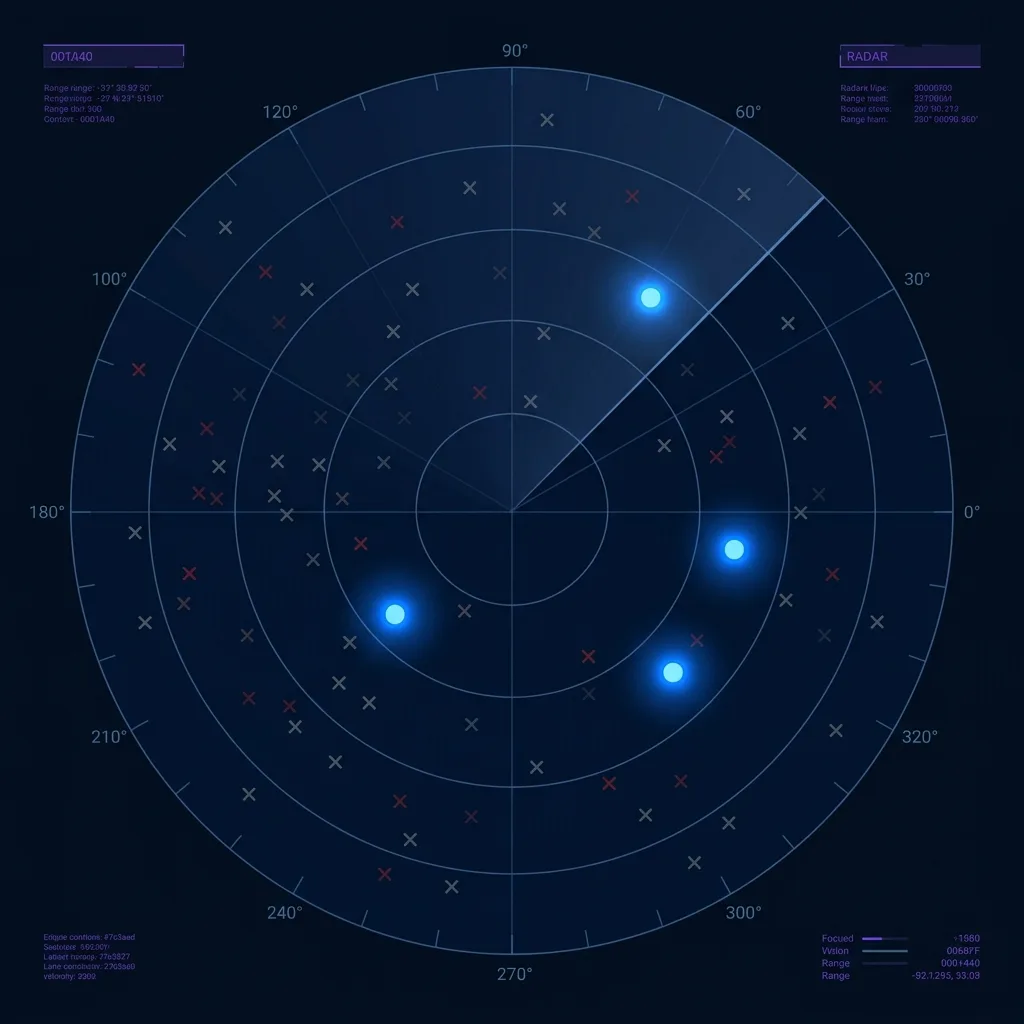
- → Intent-only lists flag 400-600 accounts as in-market; signal-stacking pinpoints 28-30 actual buyers from the same ICP.
- → A minimum of 5 independent buying signals from 3+ different categories is required to confirm a real buying context.
- → For 1 Solar Direct, a project-data signal layer drove a 6.35% reply rate and 8 meetings with big solar project operators.
Intent data should work in theory. If a company is actively researching your product category online, the logic says they are closer to buying. You reach out at the right moment.
You win the deal.
The problem is that theory breaks down immediately when you look at the actual mechanics of what "intent" is measuring, who buys intent data, and how vendors are incentivized to present it.
This article looks at why B2B intent data fails most teams that buy it, and what the teams it works for do differently.
The short version: intent alone is wishful thinking. The fix is not a better vendor; it is signal stacking.
What Is B2B Intent Data?
B2B intent data is behavioral data from a company's digital activity, such as searches, content reads, site visits and ad clicks.
Sales teams use it to spot accounts that seem to be researching a purchase.
Most B2B intent data has one of two sources. Third-party intent data is collected across publisher sites and aggregated by vendors like Bombora, 6sense or TechTarget.
When a company's employees keep reading about "cold email automation", that activity is flagged as intent for the category.
First-party intent data is behavioral data you collect yourself from your own website, emails, and ads - pages visited, time on site, content downloaded, emails opened.
This is higher-quality signal because the person interacted with your brand specifically rather than a general content network.
Intent data promises a shortlist of accounts that are "in market" right now.
What it usually delivers is a long list of companies with loosely relevant activity somewhere inside them, scored so everyone looks somewhat interested.
Why Most B2B Intent Data Fails (The Honest Breakdown)
Intent data has a real problem, and it is not the data itself. It is the four structural failures that make it nearly useless when deployed as a standalone system.
The Single-Signal Trap
One keyword search does not mean a company is buying. It means someone typed a phrase into a search bar.
That person could be a junior researcher, a competitor, an intern or a VP with budget. The signal cannot tell you which; only that the search happened.
Vendors aggregate signal volume: if 12 people at a company searched similar terms in 30 days, it scores high.
That does not solve context. 12 researchers with no buying authority still outscore 1 decision-maker ready to sign.
The Vendor Incentive Problem
Intent vendors sell "accounts ready to buy" because that converts trials. A realistic dashboard would show a few strong accounts and hundreds with loosely related activity.
Instead, anything touching a relevant keyword shows up as "in market", until that label covers much of your ICP.
This is what that AE meant when he said "companies are lying about intent data." The data is technically real.
The framing around it - "hot leads," "ready to buy," "in-market accounts" - is designed to sell subscriptions, not to give you an accurate picture of your addressable opportunity right now.
The Timing Problem
Intent data shows yesterday's research.
By the time a signal is collected, aggregated, scored, and delivered to your CRM, the window to act is often hours or days - not the weeks that most outreach cadences assume.
A company that was actively evaluating CRMs 3 weeks ago may have already signed a contract. You are reaching out to confirm a decision they have already made without you.
The vendors with the fastest data pipelines get signals to your team in 24-48 hours. The ones with weekly or monthly data refreshes are giving you a research history, not a live signal.
Most teams using intent data are working off data that is 2-4 weeks old by the time it reaches their outreach queue.
The Context Problem
Generic catch-all keyword topics - "marketing automation," "sales software," "lead generation" - trigger intent scores for umbrella topics that flag most of your ICP simultaneously.
When a company's employees visit a handful of pages in your category, they score as "in-market" regardless of company size, stage, authority, or actual budget.
The same keyword activity from a 5-person startup and a 500-person company with a Q2 budget cycle looks identical in most intent platforms.
The result is what one sales leader described to me as "it's no wonder sales called BS on intent" - the lists marketing hands over are so broad that reps stop trusting them.
And once sales stops trusting the data, the entire system collapses into a sourcing disagreement.
The Multi-Signal Approach That Actually Works
Intent signal quality tiers: from weakest (page views) to strongest (funding events), ranked by buying intent.
Here is the turn. Intent data is not worthless - it is one ingredient in a recipe that requires at least 5. Teams that see real results from buying signal intelligence do not use intent data alone.
They combine it with 4-5 other signal types to build what is better described as a "buying context" rather than a "buying intent."
A buying context is when multiple independent signals point at the same account simultaneously. A single keyword search is a curiosity signal.
A keyword search combined with a recent funding round, an active SDR hiring push, and 3 competitor G2 review page visits in the last 10 days is a buying context.
The probability of genuine purchase evaluation is dramatically different between those two scenarios.
Here are the 6 signal categories that create a reliable buying context:
Intent data tells you someone is vaguely interested in your market. Signal stacking tells you a specific person, at a specific company, is evaluating a solution right now.
The second is where outreach produces results. The first is where most teams waste their budget.
Why Most Intent Data Finds the Wrong People
At any given time, only a small share of your ICP is in an active buying cycle: evaluating vendors with a budget and a timeline. The rest are in awareness, consideration or indifference.
Intent data without context finds the wrong accounts. It surfaces the companies with the most keyword activity, including competitors, journalists, consultants and researchers without budget.
The real buyers may leave a small footprint because they are in conversations, not reading articles.
With signal stacking you find the right accounts, by requiring several independent signals from different categories before any account enters the outreach queue.
Signal stacking narrows the list to the accounts actually in a buying cycle. Your reps spend their effort on real buyers, and your domain avoids the damage of over-sending to uninterested targets.
We build signal layers for B2B companies.
Our clients stop sending to 1,000 accounts and start sending to the few that are actually in a buying context.
How to Actually Use Intent Data (The Operational Guide)
If you already have an intent data subscription, do not cancel it. Redirect it. Here is how to build a signal-stacking system on top of your existing intent data in 5 steps.
Define 5-7 Signals Specific to Your ICP's Buying Context
Start by working backward from your last 10 closed deals. What signals were present at each account in the 60-90 days before they started a sales conversation?
Funding events, hiring pushes, new tools installed, leadership changes - these patterns repeat.
Define the 5-7 most common ones and build your signal monitoring around those specific events, not generic keyword categories.
Example for a cold email agency: (1) Series A in the last 90 days, (2) new VP Sales in the last 60 days, (3) 2+ open SDR roles, (4) competitor review page visits, (5) leadership posts about "pipeline".
That is fresh budget, new leadership and active evaluation. Not one signal. Five.
Set Up Signal Monitoring With the Right Tools
Apollo for firmographic filters and funding alerts. Clay to stack hiring, tech stack and intent signals in one workflow.
Sales Navigator for decision-maker activity and job changes. Bombora or your current vendor for keyword intent, as one input, never the main filter.
The goal is a single enriched account record that shows all active signals in one place, scored by the number of signals present.
An account with 6 active signals outranks one with 2, regardless of how high either scores on any single platform.
Score by Signal Count, Not Intent Score
Replace your vendor's intent score with a simple count-based scoring model. Each confirmed signal = 1 point. Accounts with 5+ points enter the active outreach queue.
Accounts with 3-4 points go to a monitor-and-wait list. Accounts with 1-2 points stay in the ICP database but receive no outreach until more signals fire.
This is counterintuitive if you have been using vendor intent scores as your primary filter. A company with a 92/100 intent score from one platform may have only 1 real signal.
A company with a 65/100 score may have 7 independent signals confirming a buying context. Trust the count.
Build Trigger-Based Sequences That Reference the Signal
When a company hits your signal threshold, the first outreach message should reference the specific trigger - not the intent data. "Saw you raised your Series A last month - congrats.
We work with a few similar-stage companies who were building outbound at the same time." That is a relevant observation.
"We noticed you are in-market for sales tools" is a reveal that you are using intent data, and it sounds exactly as creepy as it is.
The signal is your reason for reaching out. It is not your opening line. Use it to earn relevance in the first sentence - then let the offer carry the conversation.
A well-referenced trigger message outperforms a generic "I saw you may be looking for X".
Time Your Outreach Within 48 Hours of Signal Cluster
The window closes fast.
A company that just posted 3 SDR roles and received a funding announcement is in active build mode for approximately 30-60 days before their attention shifts to other priorities.
If your outreach lands in week 1 of that window, you are part of the evaluation. If it lands in week 6, you are following up on a decision that may already be made.
Set your signal monitoring to alert your team within 24 hours of an account hitting the signal threshold. Build your outreach sequence to fire within 48 hours of that alert.
How Deep-Y Uses This
The 1 Solar Direct engagement is the clearest illustration. 1 Solar Direct is a U.S. solar distributor for large, utility-scale projects.
Their lead intelligence challenge was finding the companies behind active utility-scale projects - not just any energy company, but the ones with a project that fits right now.
We built a periodic scraper that pulls utility-scale project data from U.S. government sources, filters projects by fit, and enriches the matching companies.
Each account then gets role-aware email sequences, with a LinkedIn connect-and-DM follow-up for engaged prospects who did not book.
Not intent data that flagged thousands of accounts as "in-market." A signal built from real project data, so every email had a concrete reason to exist.
Those 8 meetings with big solar project operators - including one with the largest U.S. energy corporation - came from project-driven targeting, not from blasting a generic list.
That is what signal stacking does. It converts a spray-and-pray volume problem into a surgical targeting problem. The full story is in the 1 Solar Direct case study.
For every client, the first 2 weeks go to signal architecture before a single message is written.
If the signal stack is wrong, the outreach will be wrong. If it is right, even a mediocre sequence beats a brilliant one sent to the wrong accounts.
Frequently Asked Questions
What is b2b intent data?
Is intent data worth the cost?
What is the difference between first-party and third-party intent data?
How many signals are enough to trigger outreach?
Can a small company use intent data effectively?
The Honest Summary
Most B2B intent data fails not because the data is fake - it is real behavioral data.
It fails because vendors sell it as a shortcut to pipeline, and buyers use it as a substitute for the harder work of defining what a buying context actually looks like for their specific ICP.
Intent data is one ingredient. Combined with hiring signals, funding, tech stack changes, LinkedIn activity and first-party engagement, it becomes an early warning system for accounts that are actually buying.
The teams getting real replies from cold outreach are not using better intent data.