
Key Takeaways
- →AI cold email tools produce generic output by default.
- →The "AI voice" problem: LLM-generated email reads like LLM-generated email - buyers immediately identify and ignore it
- →What works: AI as a research and synthesis tool (pull 15 data points per contact), human-edited output, signal-based timing
- →Deep-Y client result: 81% open rate and 19 opportunities from 124 sequences at Architrainer - precise targeting plus personalization with human quality review
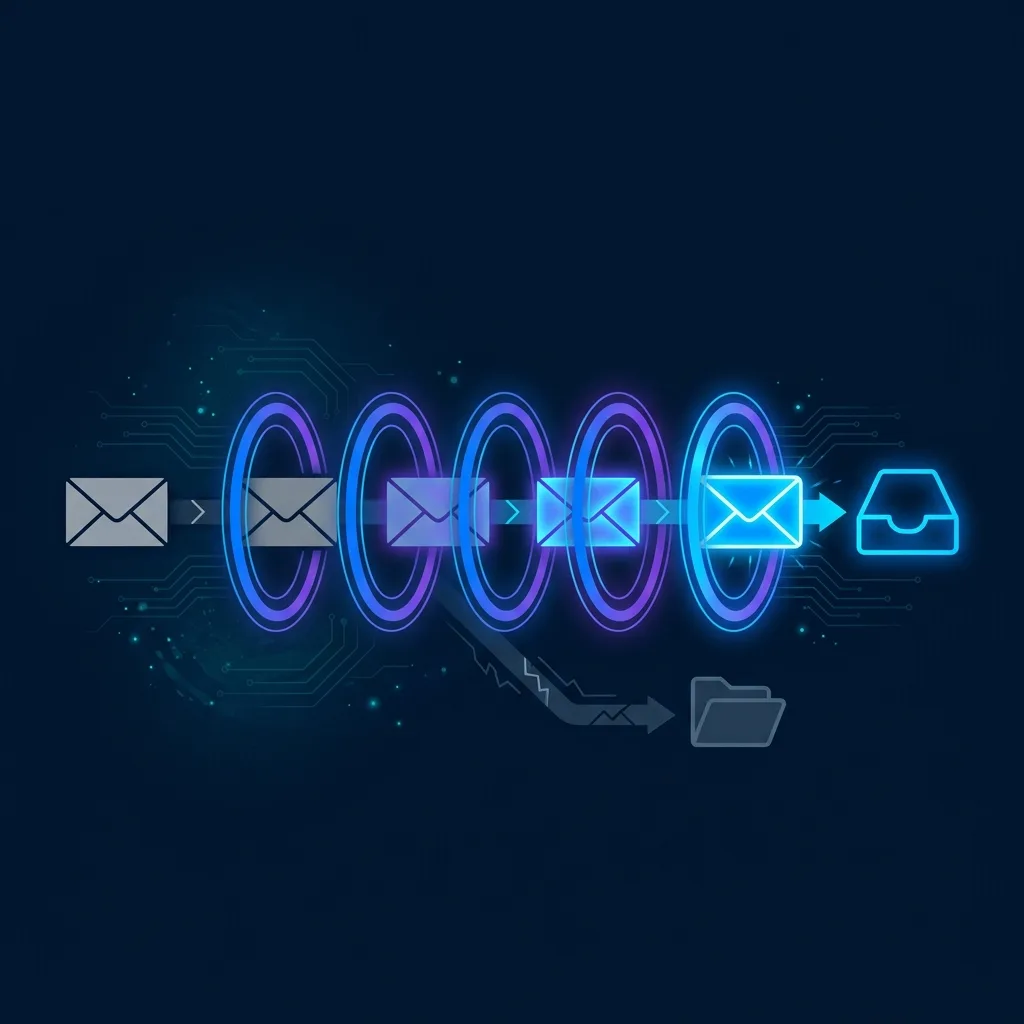
The short answer: AI cold email personalization uses AI to research each prospect and tailor the message to their situation. Done badly, it produces AI-sounding emails that get ignored.
Most B2B teams we speak to have the same experience. They invested in an AI cold email tool, plugged it into their contact list and ran the campaign.
Reply rates stayed where they were, or dropped. The tool is technically running.
The personalization tokens are populating. Nothing is working.
The problem is almost never the tool. It is the model: using AI to automate the wrong part of the process.
Every team we have audited that said "we tried AI outreach and it didn't work" was using AI to replace the writing step - not the research step.
That single distinction is the difference between outreach that gets ignored and outreach that starts conversations.
This article covers the three failure modes, the five-step system that works, the "AI voice" problem, and the legal requirements to check before you send.
Why Does Most AI Cold Email Personalization Fail?
The failure is almost always one of three things, and most teams hit all three at once.
Failure Mode 1: Shallow Personalization
The most common failure is using AI to insert the contact's job title and company name into a template and calling that personalized.
"Hi [FirstName], I noticed you're the [Title] at [Company] - we work with companies like yours to..." This is merge-tag personalization with an AI wrapper.
Prospects recognize it within the first sentence.
We hear this described the same way every time: "we're allergic to generic outreach."
Real personalization references the prospect's actual situation: a recent company announcement, a hiring pattern that signals a pain, a technology change that shows an active need.
Shallow personalization only references who the person is, not what they are dealing with right now.
Failure Mode 2: The Wrong Signals
The second failure mode is AI researching the wrong things.
Generic AI prompts pull whatever is easy to find - founding year, the About page description, headquarters location. None of that is a buying signal.
It tells you nothing about whether this prospect has a problem you can solve, and whether now is the right moment to reach them.
Effective AI personalization targets buying signals: a job change at a target role, new funding, a technology installation change, a LinkedIn post about a pain your product solves.
The research challenge is not finding information - it is finding the right information.
Most AI tools default to whatever is available, not whatever is relevant.
Failure Mode 3: No Human Review
Pure AI output at scale has a pattern problem. The same sentence structures, qualifying phrases and transitions appear across hundreds or thousands of emails.
Beyond filtering: real humans who receive cold email can identify the AI voice pattern. We have seen reply data that includes the exact phrase "this is an AI email" in negative responses.
The pattern recognition that makes LLMs efficient also makes them repetitive.
Human review is not optional - it is the quality layer that separates signal from noise.
The AI personalization trap: the tool is running, the emails are sending, and nothing is working.
The most expensive version is a team concluding "AI outreach doesn't work for our market" when the real problem is implementation, not the technology.
What Does Effective AI Cold Email Personalization Actually Look Like?
The 5-step process that produces results is not complicated. It requires discipline around where AI is used and where humans stay in the loop.
Step 1: Signal Identification
Before any AI tool touches a contact, define what a buying signal looks like for your ICP.
What does a prospect need to show - in behavior, company activity or public statements - for your outreach to be relevant right now?
For a sales automation product, that might be: SDR headcount growing + no outreach tool in tech stack + recent VP Sales hire.
Define the signal set first. AI researches against those signals, not against whatever is available.
Step 2: Research Enrichment
AI synthesizes 10-15 data points per contact from LinkedIn activity, company website changes, news mentions, job postings, tech stack data, and CRM history. The key word is synthesizes - not collects.
A well-structured AI research prompt turns 15 raw data points into a 3-sentence briefing: the person's current situation, the likely pain, and the strongest angle.
"They just posted 3 SDR roles, which means they are scaling outbound without infrastructure" is a usable briefing.
"They work at a tech company in San Francisco" is not.
Step 3: AI Drafts, Human Edits
AI generates a personalized first paragraph per contact, based on the research briefing.
A human reviews every batch for authenticity, pattern repetition and brand voice before anything is approved for send.
That is the failure. Human review is not a nice-to-have; it is the quality layer that makes the whole system work.
Step 4: Signal-Based Send Timing
Send within 48-72 hours of a trigger event such as funding, a job change or a launch. Relevance is time-sensitive, so real-time signals beat batch schedules.
day 47. The systems that produce benchmark results use real-time signal monitoring to trigger sends, not batch scheduling.
Step 5: Iteration Loop
Reply data - which signals, angles and message structures produced positive responses - feeds back into the AI prompt architecture every two weeks.
"tell me more"? The system compounds what works and sunsets what does not. This is the difference between a static email campaign and an AI-powered outreach system that improves over time.
The Architrainer result - 19 opportunities from 124 sequences, an 81% open rate and 8 deals closed or in process - came from a tightly defined ICP in the Israeli architecture market.
Targets came from industry databases, not a generic list. The list was small because the targeting was precise.
What Is the "AI Voice" Problem and How Do You Avoid It?
LLMs have a recognizable output style.
Certain sentence structures, qualifying phrases ("I came across your work on...", "I wanted to reach out because...") and transitions repeat across models and use cases.
At 500 or 1,000 emails, the sameness is detectable - by spam filters and by people who receive outreach daily and spot the pattern within the first 30 words.
The "AI voice" problem is not just a credibility issue. It is a deliverability issue.
How to Break the Pattern
Three techniques that consistently work. First: use AI to synthesize research, not to write the message. Give the AI the 15-point research briefing and ask it to extract the most relevant angle.
Then write the email from that angle yourself - or use the briefing as a prompt for a second-pass AI draft with explicit style constraints. The research AI and the writing AI should be separate steps with different instructions.
Second: use specific, non-round numbers and unexpected details. "I noticed you added 4 SDRs in Q1" is more credible than "I noticed you have been growing your sales team."
Round numbers signal template thinking. Specific numbers signal human research, even when AI gathered the data.
Third: make line one untemplatable. If the opening could be sent to 100 contacts with minimal change, rewrite it.
The first sentence should be so specific to this prospect that removing their name makes the email incoherent.
"Hi Sarah, I came across your profile and noticed you are the Marketing Director at TechCorp.
We work with companies in your space to improve their outbound results. Would love to connect."
"Hi Sarah - saw you posted about follow-up fatigue last week and just added 3 SDR roles on LinkedIn.
Most teams scaling outbound hit the same infrastructure problem around month 4. Worth a quick look at how teams like yours fixed it?"
How Do Buying Signals Change Cold Email Performance?
Signal-based outreach targets accounts at the exact moment a buying signal appears.
The phrase "we bought lists that went stale" is the exact problem signal-based targeting solves.
A static list of 10,000 companies that matched your ICP six months ago is full of contacts who have changed roles, budgets or priorities.
A dynamic signal-based list of 400 companies showing active buying intent this week is smaller - and dramatically more productive.
The 6 Signals Deep-Y Monitors Per Account
| Signal Type | What It Indicates | Timing Window to Act |
|---|---|---|
| Job change at target role | Company is rebuilding that function; a new leader has a mandate to change vendors | Within 14 days of hire announcement |
| New funding round (Series A-C) | Expanded budget, growth mandate, likely new headcount and tooling decisions | Within 7 days of announcement |
| Technology install change | Active evaluation: a switched CRM or new outreach tool signals openness to adjacent tools | Within 30 days of detection |
| LinkedIn post about target pain | Direct buyer-stated problem - highest-intent signal available in cold outreach | Within 48 hours |
| Hiring spike in target function | Scaling pain - more people means more process gaps, more tooling needs | Within 21 days of pattern detection |
| Recent product launch or rebrand | Market-entry momentum - often paired with new marketing budget and GTM initiative | Within 14 days |
Each signal narrows the list and sharpens the message.
A prospect who just hired a VP Sales, posted about pipeline visibility and added 3 SDR roles in 60 days is not a cold prospect. They are a warm one who has not heard from you yet.
The email that references their LinkedIn post and their hiring pattern is not generic outreach. It is a relevant observation at a relevant moment.
What Tools Do AI-Powered Cold Email Personalization Well?
The honest breakdown. "We're drowning in tools" is accurate for most B2B outreach teams: most AI cold email tools try to do everything and excel at nothing.
Knowing what each tool is actually best at prevents expensive mis-stacking.
| Tool | Best For | Honest Weakness |
|---|---|---|
| Clay | AI research at scale: pulls from 75+ data sources and runs GPT-4 or Claude per contact | Steep learning curve; not a sending tool, needs a delivery layer |
| Lavender | Email quality coaching: scores your emails in real time | Not a research tool: grades what you give it, does not find signals |
| Lemlist | Email + LinkedIn sequences with dynamic image personalization | AI layer is shallow next to Clay; better for delivery than research |
| ChatGPT / Claude | Personalization drafts from structured enrichment data; strong at synthesis and editing | Needs a separate research layer; does not pull live prospect data |
| Apollo AI | Contact database for ICP-matched discovery; strong search and filters | Weakest AI personalization in the group; use it as a data source |
| Instantly | Sending infrastructure at scale: inbox rotation, warm-up, domain management | Sending tool, not an AI tool; personalize upstream |
What we use at Deep-Y: Clay for research and signal enrichment, Claude for synthesis and first drafts, Instantly for delivery, and human review on every batch before send.
No single tool does all of this well.
Teams that say "our people are building spreadsheets instead of closing deals" usually run three or four disconnected tools with no handoff between research and send.
Integration is the leverage point.
What Are the Legal Requirements for AI Cold Email in 2026?
Using AI to write or research the email does not change the legal requirements.
AI adds no new legal obligation, but the extra scale makes non-compliance more costly.
CAN-SPAM (United States)
CAN-SPAM applies to all commercial email sent to US recipients.
It requires a truthful From line, a non-deceptive subject line, a physical mailing address in every email, and an opt-out honored within 10 business days.
There is no "transactional email" exemption for cold outreach - if the email's primary purpose is commercial, CAN-SPAM applies.
GDPR (European Union)
GDPR requires a documented legal basis for processing personal data. For B2B cold email, legitimate interest is the usual basis, and it must be documented, not just claimed.
The three-part test: the interest is legitimate, the processing is necessary, and the data subject's rights do not override it.
In practice: outreaching a CMO at a relevant company about a product that solves a problem in their function clears the legitimate interest test. Spray-and-pray bulk email does not.
The compliance minimum for B2B cold email:
- an unsubscribe link in every email
- a physical address in the footer
- an honest subject line
- a documented reason this prospect's interest fits your outreach
These apply whether or not AI wrote the email.
LinkedIn outreach is governed by LinkedIn's Terms of Service, not CAN-SPAM or GDPR directly.
Automated sending via LinkedIn is not permitted under LinkedIn's terms. AI-assisted research followed by manual sending is compliant.
The distinction matters: using Clay to research a prospect and then sending a manually-composed LinkedIn InMail is fine. Using a bot to send InMails at volume is a terms violation and risks account suspension.
How Do You Measure Whether AI Personalization Is Working?
81% open rate - Architrainer, cold email
17.6% of targeted agencies replied - Figureit, cold email
6.35% reply rate - 1 Solar Direct, cold email
Three client results, each with its own metric and channel.
Most teams measure the wrong things. Emails sent is an activity metric that says nothing about results.
Total replies include unsubscribes, which inflates the number.
The metrics that actually indicate whether your AI personalization is functioning correctly are narrower and more specific.
- Open rate
- Architrainer hit an 81% open rate across 124 sequences - that is what precise targeting looks like.
- Reply rate
- Figureit drew 158 replies from 900 targeted agencies; 1 Solar Direct reached a 6.35% reply rate across 1,448 prospects.
- Positive reply rate
- Interested replies plus referral replies as a percentage of total replies show whether the AI is attracting the right conversations.
- Opportunity rate
- Architrainer generated 19 opportunities from 124 sequences.
Frequently Asked Questions: AI Cold Email Personalization
What is AI cold email personalization?
Does AI cold email actually work?
What is the best AI tool for cold email personalization?
What is signal-based cold email outreach?
What's a good cold email open rate with AI personalization?
What's a good cold email reply rate in 2026?
Getting generic replies from AI tools?
The tools are fine. The personalization system isn't.
We audit your current outreach - signals, ICP targeting, AI prompts, sequence structure - and rebuild the layer that's failing.